Note: My editor’s blog is not reporting, not unbiased and not written in AP-style like my news coverage. There will many opinions, speculations, and interpretations. They are my own. This one is particularly late. I had to rewrite it from memory after my computer died after getting soaked at a outdoor press conference.
I spent the Labor Day weekend doing two things:
1.) Watching correspondence between Becerra, Wong and Meyers as they negotiated keeping the county’s Associate Judges ahead of the upcoming budget vote.
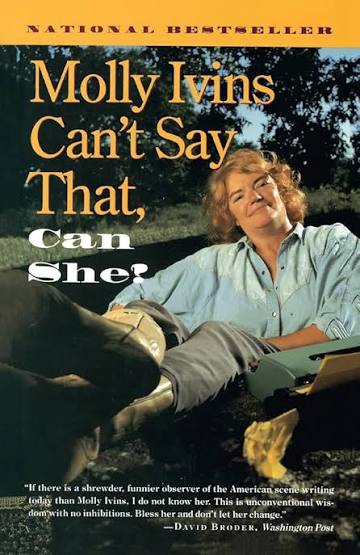
2.) Reading and watching a book and documentary about Molly Ivins.
While I was slightly stressed and hoping for a bipartisan feel good story to break with the Associate Judge conundrum, the book had me giggling so much I was kicking my feet. My sister and I bounced from laughing to tears throughout the documentary.
If you don’t know who Molly Ivins is, let me introduce you to one of my heroes. Molly was a journalist, a syndicated columnist, and an author. She had a persona as big as Texas’ mystique and the unique way she had of describing the state only exacerbated both.
Molly once said, “You know, I have over the years tried several times to explode myths about Texas because I think some of the stereotypes are so useless and silly. What happens whenever I try to do that though is I wind up inadvertently reinforcing the idea. I mean, I always try to tell people, look, the reason the sky is bigger here is because we got no trees, cowboys mostly stink, and it is hot nearly all the damn time.”
She grew up in River Oaks, attended St. Johns, Smith and Columbia. But don’t get it wrong, Molly was an outsider and the opposite of the thin-wristed WASPS she grew up with. She spoke of her time at Smith, “To be a Texan in Massachusetts was to automatically have about twenty IQ points subtracted immediately as soon as you opened your mouth. And to have it sort of a sin that you were probably a bit of a barbarian.”
Molly was six feet tall at twelve years old and she could usually be found in a tree with a book. She described it as being “a Saint Bernard with a bunch of greyhounds, a Clydesdale amongst thoroughbreds.”
Her father was a racist. She pissed him off by bringing a black man over to their house in River Oaks one day. Her father drove up to find the man swimming in the pool. All hell broke loose.
But Molly had figured out around age ten that racism was bullshit and that revelation shaped her relationship with authority for the rest of her life. “The thing about growing up anywhere in the South before the Civil Rights Movement was that you sooner or later became aware that grownups were lying to you. I remember being told not to drink out of that fountain, dear. It’s dirty. Well, we lived on the white side of town, and the white fountain was always covered with chewing gum and grubby paws marks, and the color fountain was clearly the cleaner of the fountains.”
She had a dog named Shit. And lived like a pauper. She spent her years covering the Texas legislature bellied up to a bar with both sides of the aisle. Molly could drink them all under the table.
The political establishment was afraid of her but loved when she wrote about them. People didn’t stay mad at Molly too long. Probably because her assessments were accurate. Accurate and funny.
She wrote whatever she wanted, mostly. Once when she went on assignment for the New York Times to cover a small town tradition of chicken processing where a good portion of the population spent the day drinking beer and killing and processing chickens, Molly didn’t get exactly what she wanted on paper. Her editor called her into his office. She referred to the shindig as a “Gang Pluck.” She did that a lot, play the words. Unfortunately, this particular editor didn’t let it get to print, “You wanted the readers of the New York Times to think about the word fuck!” My man, it’s funny…
She covered the “Texas lege” and her portrayal of it is the stuff of legend.
One of my favorites is her account of what happened to “reform” in the Texas Legislature after Speaker Gus Mutscher was convicted in the Sharpstown scandal in the early ’70s.
The setup is almost too perfect: a wave of reform-minded freshman legislators gets swept into office, genuinely determined to clean up Austin. And for a little while, it works, new House rules, a real campaign-finance law, some ethics legislation. Then the session grinds on, and reform quietly runs out of steam right around the day the Legislature decides to honor the Apache Belles, a well-known college drill and baton-twirling squad, for their contributions to Texas culture. Molly described it in detail, “The Belles, all encased in tight gold lamé pants with matching vests and wearing white cowboy boots and hats, strutted up the center aisle of the House with their tails twitching in close-order drill.”
The tribute itself would be forgettable political pageantry: Tyler roses for the Speaker’s wife, an honorary title for the Speaker – “Apache Beau”, the usual bit, except for the closing gag. A handful of Belles who hadn’t come down to the floor were seated up in the gallery instead, and at the emcee’s cue, they turned around and “pertly perched their gold-laméed derrièrs over the brass rail” so the crowd could see “upon each posterior was a letter, and they spelled out R*E*F*O*R*M.”
It’s a perfect piece of Texas political theater: absurd, a little raunchy, and Molly described it with her usual deadly accuracy.
She walked a line I find myself navigating now, insider or outsider.
She gave up access when there was a conflict of interest. “I already had friends. They were friends of mine before they went into politics and public life. Ann Richards was a camping buddy of mine. It’s my fault she went into politics and got elected governor.”
Molly went on to say, “I was working very hard to not ask her for anything, like even an interview. So basically, I didn’t talk to her much while she was governor.”
Bill Clinton was known to call her up in the middle of the night. His welfare reform bill pissed her off. She didn’t vote in the president’s race that year.
She once got drunk at an “highfalutin” political event and told Congresswoman Nancy Pelosi to get a voice coach because she sounded shrill. In the spirit of Molly, Congressman Gill, people will take you more seriously if you speak through your diaphragm instead of your nasal passages.
A few more of my favorite facts about Molly Ivins:
She was the iconoclast who first called George W. Bush “dubya” and “shrub.”
She never married. She never had children. She ended her life by writing a book on the Bill of Rights.
At the height of her popularity she was appearing in three hundred and four hundred papers. She had a nationwide audience.
And a few of my favorite quotes from Molly Ivins:
“When politicians start talking about large groups of their fellow Americans as ‘enemies,’ it’s time for a quiet stir of alertness. Polarizing people is a good way to win an election, and also a good way to wreck a country.”
“I dearly love the state of Texas, but I consider that a harmless perversion on my part, and discuss it only with consenting adults.”
“It is possible to read the history of this country as one long struggle to extend the liberties established in our Constitution to everyone in America.”
Molly fought breast cancer for the better part of eight years, and she fought it the way she did everything else, out loud and with a sense of humor. She was diagnosed in 1999, beat it back more than once, and kept filing columns nearly to the end. Her last ones, written when she could barely sit up, told readers to raise hell about the war in Iraq.
She died at home in Austin on January 31, 2007. She was 62.
I’ve been thinking about her a lot since my Labor Day weekend spent watching the documentary and reading the book. I wonder what Molly would say about our local corrupt elected leaders or about all the political lawsuits we’ve had since the primary. She’d have had a field day. She’d have found the one perfect word for every one of them, and they’d have hated it and loved it in equal measure.
Texas politics hasn’t gotten any less absurd since Molly left us. It’s just gotten a lot less funny without her around to tell us about it.